
UNESCO: Need separate schemes, budgets, teacher recruitment for mother tongue-based multilingual education
Shradha Chettri | December 16, 2025 | 06:47 PM IST | 3 mins read
NESCO’s State of the Education Report for India observes that most tribal children do not study in their mother-tongue, affecting comprehension
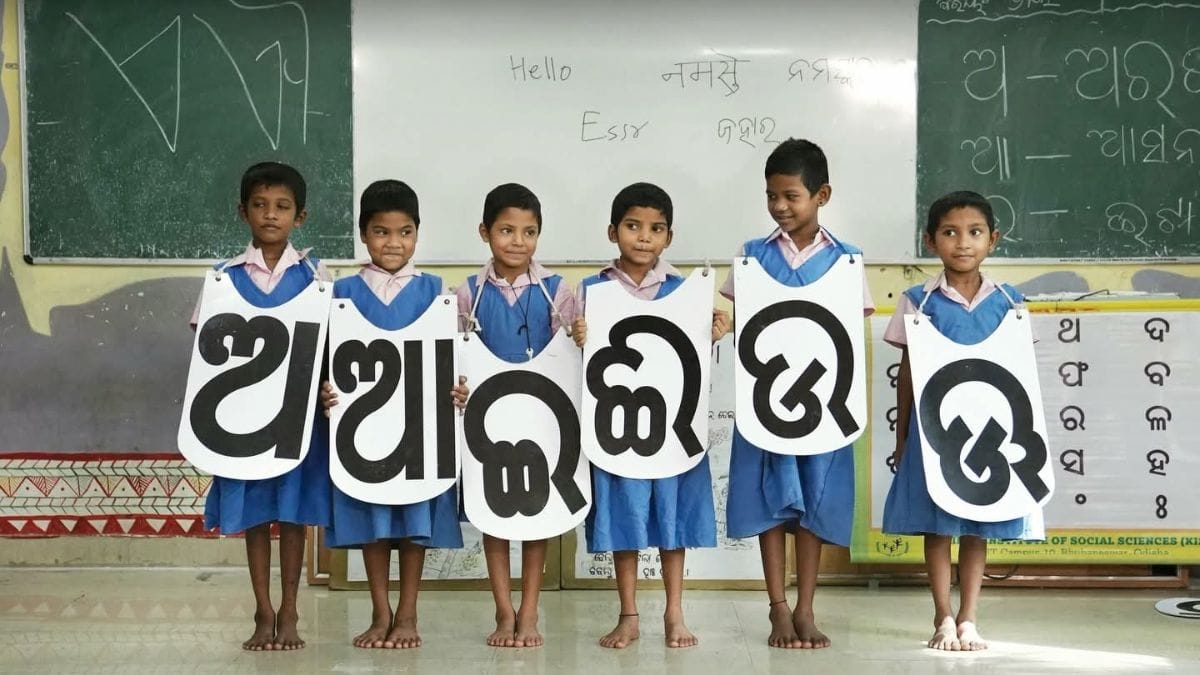
Dedicated budget lines, within central and state schemes, to fund mother-tongue based multilingual education (MTB-MLE), is a key recommendation made by international NGO UNESCO to the Indian government. In its State of the Education Report for India 2025, released on Tuesday, the United Nations Educational, Scientific and Cultural Organisation also stresses on the need to establish a "national mission” to harmonise school and cluster level language mapping.
Meanwhile the limited availability of textbooks, teaching learning materials, monolingual teaching practices and under-representation of tribal languages on digital platforms are listed as challenges facing the country in implementing multilingual education.
The SOER 2025, titled “Bhasha Matters”, examines how multilingual education is unfolding across the country’s school and teacher education systems.
As envisaged by the National Education Policy (NEP), the government has been stressing on education in the mother-tongue at least up to Class 5.
Learning in mother-tongue: Challenges
The report finds that in many tribal and minority language regions, young learners still begin school in languages they do not speak at home, “affecting early participation and comprehension, an issue felt more accurately by girls in remote settings and by children with communication related or learning disabilities”, says the report.
The other challenge is the limited availability of textbooks and teaching learning materials in children’s own languages.
The report also highlights that monolingual teaching practices persist despite multilingual classroom realities. “Many teachers feel underprepared for multilingual lesson design or language mapping,” adds the UNESCO report.
Another challenge is the under-representation of various languages on digital platforms. “Accessibility features are inconsistent and connectivity gaps continue to affect remote regions, particularly impacting girls and learners with disabilities,” it added.
As per Census 2011 India has 121 constitutionally-recognised languages and 1,369 mother tongues. As a part of multilingual education, National Council for Educational Research and Training (NCERT) has also released primers for 121 langauges.
Need equitable, inclusive financing: UNESCO report
UNESCO recommends a dedicated government scheme to fund multilingual teacher recruitment and training, material development, digital inclusion and research.
It suggests creating financing mechanisms with targeted allocation for girls, children with disabilities and now dominant language communities. Having a “national mission” will help bring together diverse ministries working on education – the ministry of education itself, tribal affairs, culture and technology – for effective implementation of “mother-tonge based multilingual education”.
For the union government, it stresses on leveraging digital public infrastructure and for state governments, the UNESCO recommends adoption of clear” language-in-education policies”.
“Policies should be based on school-and cluster-level language mapping and specify how languages will be used as mediums of instruction, as subjects and as co-curricular resources across stages, including pathways for languages like Santhali, Gondi, Kui, Saora, Ho, Mizo, Tado and others,” it added.
Also read How a ‘10th pass’ government employee gave his language a script, won the Padma Shri
Strengthen teacher recruitment, deployment
Another important recommendation is that states adopt recruitment rules and strategies that prioritise teachers proficient in learners’ home languages and regional languages, especially in tribal and border areas.
“The National Professional Standards for Teachers and state norms should explicitly include multilingual pedagogy and language responsive assessment as core professional competencies,” the report says.
Not just for fresh recruitment, it points out that various bodies like National Council for Teacher Education and Training (NCERT) and universities should work to reform pre-service and in-service teacher education to embed multilingual pedagogy at all stages.
“Teacher-education curricula should be stage differentiated: mother tongue-led early literacy and numeracy, bilingual scaffolds and disciplinary language in middle schools and semiotic, multi-script and academic literacy strategies in secondary education,” says the report.
Along with these, the report also highlights the need to standardise multilingual pedagogy across all stages and develop and distribute high-quality multilingual learning materials.
It points out that “institutionalising community participation” – engaging storytellers, elders, artisans, artists, cultural practitioners and community workers in curriculum development, classroom activities and teacher education modules – can help with language learning.
 Add as a preferred source on google
Follow us for the latest education news on colleges and universities, admission, courses, exams, research, education policies, study abroad and more..
To get in touch, write to us at news@careers360.com.
Next Story
]Viksit Bharat Shiksha Adhishthan Bill centre’s ‘total power’ grab over higher edu, say MPs; draft goes to JPC
Viksit Bharat Shiksha Adhishthan Bill 2025 abuses law, flouts federal structure, allege opposition MPs; say it undermines states and university autonomy, imposes Hindi through excessive Sanskritisation
Shradha ChettriLatest Education News
]Related News
]CBSE Date Sheet 2027 Live: Class 10, 12 board exam timetable soon at cbse.gov.in; LOC dates, passing mark
NIOS Date Sheet 2026 LIVE: Class 10, 12 October exam schedule soon at nios.ac.in, latest update
Odisha government inks pact with strategic partners to boost skill training


