
CBSE Curriculum 2026-27: Three-language policy is ‘compulsory Hindi’, says Tamil Nadu CM; criticism online
K. Nitika Shivani | April 4, 2026 | 02:06 PM IST | 4 mins read
Among a host of changes to the CBSE Class 9 and Class 10 syllabus, the board has made a third language compulsory till Class 10. Rollout of the new scheme from 2026-27

Best Courses After 10th Class
Explore the best courses after 10th across science, commerce, arts, and vocational streams. Find the right path based on your interests and build a strong career foundation.
Download EBook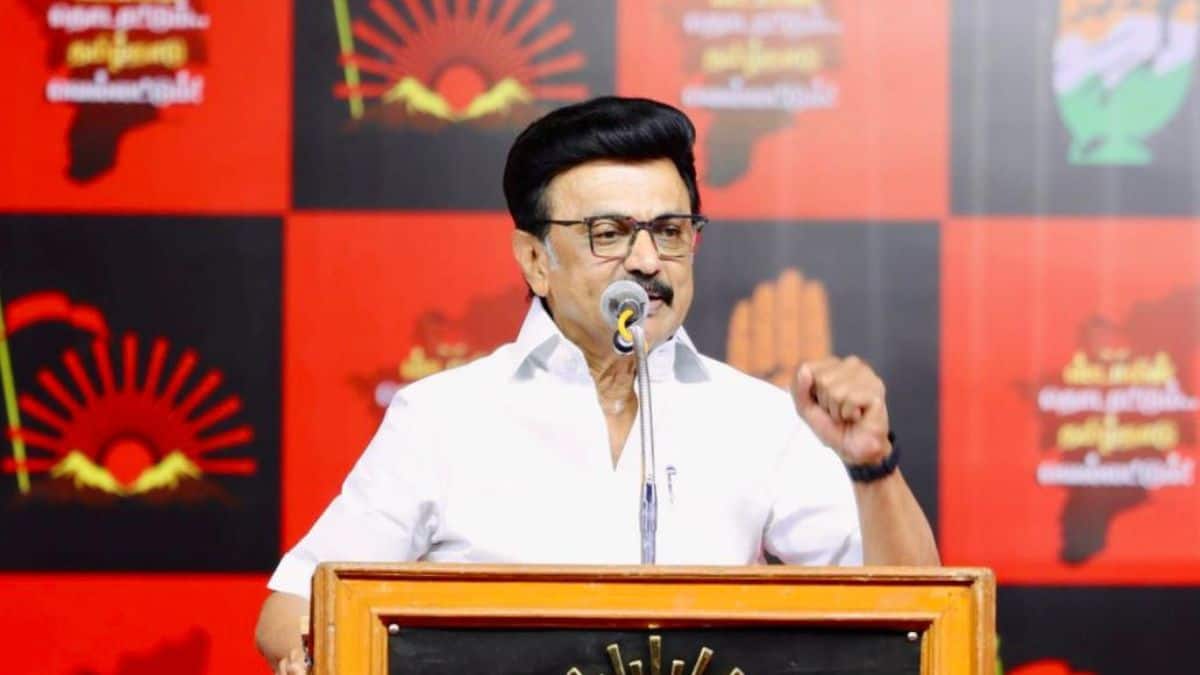
Tamil Nadu Chief Minister M.K. Stalin took a stand on the Central Board of Secondary Education’s (CBSE) new curriculum aligned with the National Education Policy 2020(NEP), calling it a “calculated attempt at linguistic imposition,” even as criticism spread across Tamil Nadu, largely through social media reactions from academics, parents and civil society groups.
The framework, which proposes a phased implementation of the three-language formula from Class 6 to Class 10, with assessments from the 2027–28 academic year, has reignited debate in the state over language policy, federalism and educational priorities.
The CBSE academic curriculum 2026-27 is set for rollout for Class 6 from this year.
CBSE new curriculum triggers political backlash
Stalin said the revised curriculum, presented as a move to promote Indian languages, in effect advances Hindi in non-Hindi speaking regions without ensuring parity. He questioned whether similar requirements would apply to Hindi-speaking states.
“For students in southern states, this translates into compulsory Hindi learning. But will students in northern states be required to learn Tamil, Telugu, Kannada or Malayalam?” he asked, calling the lack of clarity “discriminatory.”
The chief minister also accused the union government of inconsistency, pointing to what he described as its failure to adequately promote Tamil in Kendriya Vidyalayas. He raised concerns over implementation challenges, including teacher availability, training capacity and funding.
“This appears to be an ill-conceived policy announced without planning, resources or accountability,” Stalin said, warning that it could create structural disadvantages for students from non-Hindi speaking states in higher education and employment.
Tamil Nadu holds ground on language policy
Reaffirming the state’s long-standing stance, School Education Minister Anbil Mahesh Poyyamozhi said Tamil Nadu would continue to follow its two-language policy. He noted that the state had declined financial incentives of Rs 3,458 crore linked to aligning with the Centre’s framework. "Ideology cannot be imposed,” he said.
DMK MP Kanimozhi echoed the criticism, calling the framework a “draconian attack” on the languages and cultures of non-Hindi speaking states. She warned that compulsory assessments under the three-language formula would place an “unnecessary and unfair burden” on students.
CBSE Academic Curriculum 2026-27: Teachers raise questions
Criticism has also emerged strongly from academic circles, with professors and education experts voicing concerns online about the intent and design of the policy.
“The idea itself is entirely wrong. Where is the diversity in this approach? Where are the South Indian languages in any meaningful sense?” a senior professor from a Chennai-based university said in a widely shared post. “Time and again, history has shown that languages like Tamil, Telugu and Kannada are not only culturally significant but academically valuable. Yet there is no real expansion or encouragement for them in this framework.”
Another academic described the development as part of a recurring pattern. “This feels like an endless cycle. There is always resistance from states like Tamil Nadu, and yet similar proposals keep returning in different forms,” the professor wrote.
“Those shaping these policies must understand that they do not own India or its linguistic identity. India belongs equally to all its states, and that diversity must be acknowledged, not overridden,” the post added.
Parents react, raise concerns
Parents, too, have taken to social media to express concern over the potential academic burden and long-term implications of the policy. Some questioned whether the additional language requirements would distract from skill-based learning.
“Children are already under pressure. Adding another compulsory layer without clarity on outcomes only increases stress,” wrote a parent of a middle school student.
“As a teacher and a parent, I want my children to learn the regional language of the state they live in. That is how they connect with society and culture. Where is the equality in this system? We cannot keep holding a torchlight for central decisions that do not reflect our realities.”
A section of parents indicated they were reconsidering CBSE schooling altogether. “If this is implemented the way it is being discussed, many of us will seriously think about moving our children out of CBSE-affiliated schools,” another parent said, reflecting a sentiment that has gained traction online.
Others, however, urged caution, suggesting that the issue reflects broader structural challenges in the education system. “The system itself needs reform. Language debates keep resurfacing, but the larger concerns around flexibility and learning outcomes remain,” a parent and education consultant noted.
#StopHindiImposition: Debate builds online
While the issue has sparked strong reactions, much of the response so far has taken to various social media platforms as well.
Student groups, language rights advocates and regional voices have engaged in the debate online, with hashtags like #StopHindiImposition and discussion threads highlighting concerns over linguistic identity, federal rights and educational equity.
 Add as a preferred source on google
Follow us for the latest education news on colleges and universities, admission, courses, exams, research, education policies, study abroad and more..
To get in touch, write to us at news@careers360.com.
Next Story
]415 universities offer SWAYAM, NPTEL online courses, but UGC’s credit transfer scheme finds few takers
Despite over 4,000 SWAYAM portal and 600 NPTEL MOOC programmes free, UGC’s scheme falters as online courses fail to engage students; panel pushes for mandatory 20% credit transfer by 2026-27
Shradha ChettriLatest Education News
]Related News
]Board Exam Time Table 2027: TN 10th, 12th, AP Inter date sheets out; TS, CBSE, RBSE, JKBOSE schedule soon
CBSE Board Exam Dates 2027 LIVE: Class 10th, 12th subject-wise timetable soon at cbse.gov.in, LOC submission
Andaman schools shut on October 27; Odisha districts on October 28, 29 amid ‘Cyclone Arnab’


