
415 universities offer SWAYAM, NPTEL online courses, but UGC’s credit transfer scheme finds few takers
Shradha Chettri | April 3, 2026 | 01:06 PM IST | 6 mins read
Despite over 4,000 SWAYAM portal and 600 NPTEL MOOC programmes free, UGC credit transfer scheme falters as online courses fail to engage students; panel pushes for 20% mandatory credit transfer
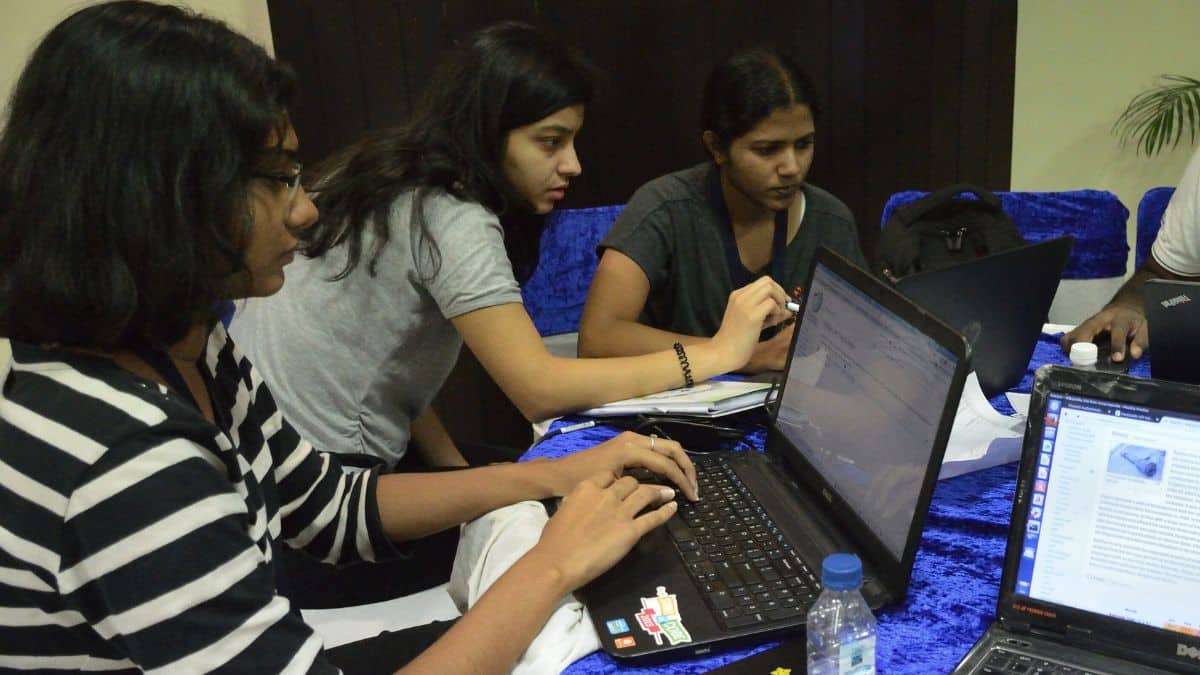
NPTEL SWAYAM Online Courses: On paper, it’s quite a revolution – university students can earn up to 40% of their academic credits by taking free online courses – anytime, anywhere, on any device. In practice, two years after the University Grants Commission (UGC) made it possible, most universities are barely getting started – a handful have not started at all, and the 15-20% students who are opting for it are largely uninterested.
Formally titled the Credit Framework for Online Learning Courses through Study Webs of Active Learning for Young Aspiring Minds (SWAYAM) Regulations, 2021, the framework primarily channels students toward the SWAYAM portal – a government-backed Massive Open Online Courses (MOOC) platform which delivers over 4,400 courses, prepared by educational institutions, free of cost with the approach of “Anyone, Anywhere, Anytime” Learning.
There is also “SWAYAM Plus” – a platform with courses prepared by close to 89 industry partners and with over 4.8 lakh enrollments.
The parliamentary standing committee on education, women, children, youth and sports headed by Congress MP Digvijaya Singh, in its report, has also expressed concern over the slow adoption of the credit transfer through SWAYAM.
SWAYAM Portal Courses: Actual proportion
Though 415 universities are known to have adopted the SWAYAM Credit framework, the panel states, “the proportion actually implementing credit transfers is unclear”.
It wants the government to provide an institution-wise implementation status of the adoption.
“The committee recommends that UGC should take necessary steps mandating all affiliated colleges to allow students to earn at least 20% of their total academic credits through SWAYAM courses, with a phased implementation timeline starting from academic year 2026-27,” the report added.
It strictly states that non-compliance should be flagged during NAAC accreditation assessment.
One of the largest universities, Delhi University (DU), has not adopted the scheme following opposition from teachers and teacher representatives in the statutory bodies.
Mithuraaj Dhusiya, an elected executive council member at DU, said, “There is evidence, the whole idea of best teaching possibility is through offline. Moving to online learning will impact teaching-learning workload. Secondly, it would also impact students coming from all sections of society, particularly women. COVID has shown us that all students were impacted due to online courses, but women were the worst-affected. For many of them, studying in a public university is also a way to gain freedom and autonomy from the domestic sphere.”
Also read ANRF spent just 61% of its budget for 2025-2026, nothing in first 2 years: Parliament panel report
NPTEL SWAYAM: Only monitored online courses
Most universities, especially the public ones, for now are just sticking to courses on the SWAYAM and National Programme on Technology Enhanced Learning (NPTEL).
NPTEL is a joint venture of the IITs and IISc, funded by the Ministry of Education (MoE), and was launched in 2003. Initially started as a project to bring quality education to every corner of the country, NPTEL now offers over 600 courses for certification every semester in about 22 disciplines.
At Nagaland University (NU) the regulations were implemented last semester. “Students can take relevant/allied/cognate papers in consultation with the departmental SWAYAM (DSC) coordinator. As of now we have allowed students to opt only from the SWAYAM platform,” said Mayur Mausoom Phukan, nodal officer, SWAYAM at NU.
Even at Mody University of Science and Technology, a women’s private university in Sikar, Rajasthan, the choice is NPTEL.
Ashutosh Bhardwaj, VC at the university, explained, “We are implementing it very slowly. Our students are taking one course through NPTEL. We have implemented it in one of our schools – the School of Engineering and Technology. For the first time we did not give them a choice. At present we are not even at 1%”.
The university has six schools at the undergraduate level. At the masters level it has not been implemented. The first time they implemented it was just one paper in the entire year.
“We are planning to give more options to students – one course every year,” said Bhardwaj.
However, Kumaun University, a state private university in Nainital, Uttarakhand, has kept it open to other platforms as well.
DS Rawat, VC, said, “We have implemented the regulation in the university and in all 73 colleges affiliated to it. Students can choose from SWAYAM, Coursera and others.”
Similarly, in Manav Rachna International Institute of Research and Studies, a private university in Haryana, students have a variety of options.
“While SWAYAM is one of the most widely recognised platforms in India, students may also opt for courses offered through other credible MOOC platforms such as NPTEL, Coursera, and Udemy etc. However, the selected courses must be relevant to the student’s programme and should follow the four-quadrant approach prescribed for online learning. The transfer of credits from such courses is subject to proper course mapping and approval by the statutory bodies of the university,” said Shaveta Bhatia, director, Centre for Distance and Online Education at Manav Rachna.
SWAYAM Online Courses: Participation, assessment
Across universities, opting for these online courses have mostly been left open.
Rawat said, “Participation has been about only about 15-20% of the students in our university.”
There are also concerns about assessments. “For NPTEL exams, assessment is offline. For other platforms, we do not know. In these courses, assessment is key. Online learning is still at a nascent stage, so we have to constantly mentor and hand-hold students,” said Bhardwaj.
While for NU, which is confined to SWAYAM, they have no centre to conduct the exams.
“The National Testing Agency (NTA) conducts the exam for these courses twice a year. But here we have no exam centre – that is the biggest challenge,” said Phukan.
Universities also highlighted the need to align the exam schedule as result declaration may be affected if exams for SWAYAM courses are held later.
The other challenge is proper course mapping with the existing curriculum “...ensuring the equivalence of course content and learning outcomes. This is particularly evident in humanities, literature, and economics, as well as in certain specialised areas where suitable or equivalent online courses may not always be available across all domains,” said Bhatia.
Most courses available on SWAYAM are related to STEM education.
In fact, the UGC has instructed higher education institutions (HEIs) across India to carry out a demand-driven mapping of online courses on the SWAYAM portal for the July 2026 semester.
“This exercise will enable effective planning and facilitate offering of courses that are best aligned with the specific requirements of universities. Universities are requested to examine the curriculum with the list of available SWAYAM courses and provide inputs on gap areas,” a UGC notice said.
Also read Central institutions fill over 30,000 posts; SC, ST, OBC ones more slowly: Education ministry data
SWAYAM portal content
The parliamentary panel had raised concerns over linguistic diversity of the courses on the platform. “The majority of SWAYAM courses are in English or Hindi while a significant proportion of India's student population learns best in their mother tongue,” it said.
The committee has recommended that by 2028, at least 500 SWAYAM courses be made available in each of the 22 Scheduled Languages “…with dedicated funding for translation, dubbing, and regional language content creation, and involvement of regional language universities and state governments in content development,” the report added.
Students who have opted for the courses say they are not very engaging. Shruti Kakkar, a student at a central university in Delhi, said, “I have attended one course on understanding disability. It was quite boring so I did not complete it.” She is a sociology student in her final year of graduation.
 Add as a preferred source on google
Follow us for the latest education news on colleges and universities, admission, courses, exams, research, education policies, study abroad and more..
To get in touch, write to us at news@careers360.com.
Next Story
]CBSE AI Curriculum for Classes 3-8: What’s in the syllabus, how will it be taught, will there be exams?
CBSE board’s artificial intelligence and computational thinking curriculum was designed with help from IIT Madras. It proposes embedding AI in existing CBSE subjects, assessment without exams
Shradha ChettriLatest Education News
]Related News
]Jamia Millia Islamia students refuse to end protest; alumni extend support
JMI Protest: Congress extends support to protesters amid campus unrest
ESTIC 2026: PM Modi to inaugurate emerging science and technology conclave on October 27


