
ISB fees high due to quality, 50% students should get some scholarship: Dean
Sheena Sachdeva | December 4, 2025 | 02:32 PM IST | 11 mins read
ISB dean speaks on new programmes, slow growth in placements and average package, the flexible curriculum and why an MBA degree will always be relevant
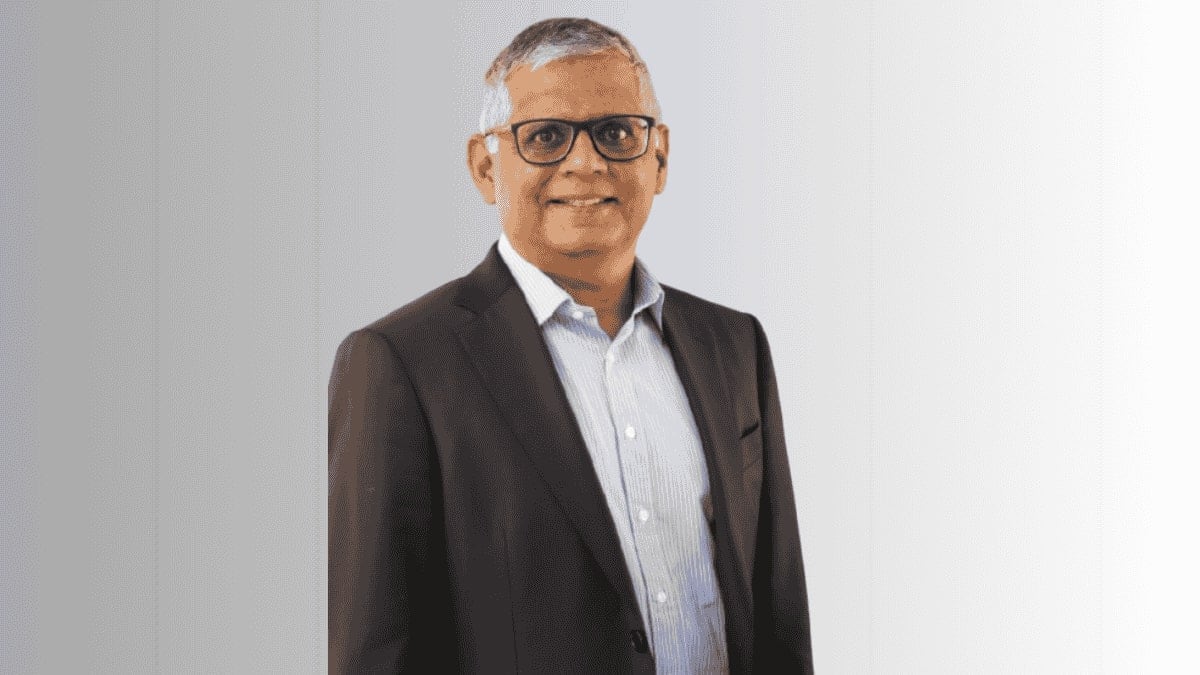
This year, Indian School of Business (ISB), Hyderabad and Mohali, made its “most significant” course launch in years – a Postgraduate Programme for Young Leaders – in line with the trend of more leadership positions going to the young. It follows a widespread change in curriculum that gave students more flexibility and brought them closer to industry, even as the job market changed. ISB dean Madan M Pillutla spoke to Sheena Sachdeva about the curriculum revision, AI, placements, fees, student well-being and more.
Admission to ISB Hyderabad and Mohali is based on a number of standardised tests, including the international Graduate Management Admission Test (GMAT) and GRE. It also accepts scores on the IIM CAT. This year’s exam, CAT 2025, is scheduled for November 30.
Edited excerpts from the conversation below:
What new courses and departments have you started recently? Any in the pipeline?
The most significant launch is our 20-month Postgraduate Programme for Young Leaders (PGP-YL) launched in 2025. This is for people with zero to two years of experience. It will be similar to the “no experience” two-year programmes that are usually taught in b-schools in India. The first 130 people were also inducted in July this year.
Also read Director General of IMI: ‘MBA courses now need modular curriculum linked to industry problems’
If you look at the bulk of the Indian market, most people go for postgraduation just after undergraduation. However, in our usual courses, we ask for at least two years’ experience where they join classrooms after having created a small niche. This has served us well with our alumni and students have done extremely well.
But a lot of young people in the world, not just in India, are looking to do their MBA immediately after their undergraduation. Due to this, the world over, a lot of masters in management courses have been introduced in the last seven to eight years. We thought, if this is the trend and we have the capability in terms of postgraduate education, why not start something similar.
People are getting into leadership positions much younger these days than they were in the past. So, moving to a younger group of people and educating them did not seem like a very bad idea.
Further, ISB is quite big in executive education.
How have the placements been over the last two years? Many have struggled.
Placements have been harder. About three years ago, for a batch of about 800 people, there would be about 2 ,000 offers, which means, on average, two and a half offers per student. This number has shrunk significantly now. Now, for the same batch, we get about 1,200- 1,250 offers.
Also, the year-on-year salary increase that we used to see five-years ago, has decreased. For instance, if the average salary was ‘X’, the next year, it would be 1 .1x, 1 .21x and so on. However, we are not seeing that kind of year-on-year growth in the ISB average package.
Though the salaries are still high, we are not seeing that kind of growth. Also, certain roles were seen a lot more. Tech firms which came to placement drives and hired people in product management roles have significantly reduced now.
But consulting and general management remain strong. Jobs in fast moving consumer goods (FMCG) have remained strong. However, there are some roles that have remained and some have shrunk a lot in the last few years. Currently, the market is hard. We are still not seeing a lot of tech companies coming in for the product management roles. We have already informed our students that it's going to be hard. In terms of project management roles, maybe a few of them might get it. But the market isn't the way it was five years ago.
Have AI and other new technologies pushed you to revise your curriculum?
Two years ago, looking at our programme portfolio – where the average PGP class comes with around four years of experience – we thought of allowing them to craft their own postgraduate programmes. When most of the students have worked for four-five years, they have an idea about what they want to do. So, we thought the core courses should include which are “required” for them.
Also read MBA Jobs: Capstone projects, case competitions become key placement tools amid hiring slowdown
We introduced a flexi-core course called “frontier technologies” where students learn how AI and emerging technologies are reshaping different business landscapes. Also, if a student has taken a marketing course, out of 10 sessions, two will be on AI in the marketing function.
Secondly, we realised that it's time to work with the industry. We've got something called an experiential learning project (ELP), which is mandatory. Students work on live-projects in small teams offered by the industry. These projects are mainly in and around AI. We expected this because companies also are experimenting and trying to figure out what they want to do.
We have also changed the number of terms. Earlier, we had eight six-week terms; now we have seven six -week terms and then another six weeks as “block weeks” in each term. This includes industry practitioners coming and teaching, students going on work trips and other immersive experiences. Here, industry is teaching students. We had anticipated some of these things and we created spaces in the curriculum where industry contributes.
In the past, we used to give students one decision-making framework as case studies as an elective. However, now, we have put three frameworks together into one bucket, including operations, statistics and behavioural sciences and others, and students have to choose two as per their interests.
Also, ISB is very well connected to the industry. Many big tech and consulting firms hire many students every year. This has happened because our students engage with them right from the beginning of the batch. Both industry and academic inputs come from them continuously on a regular basis. This is ISB’s “USP”.
ISB was started by a bunch of people who were interested in creating a business school that was nimble, moving with the times and creating the changes as per industry requirements.
Top B-schools are seeing a shift – more women are joining and fewer engineers. What has been ISB’s experience?
ISB has always valued the diversity in the classroom. The belief always was that a diverse classroom creates the right learning environment. People learn from each other in the batch, as much as they learn from the faculty.
Unlike other schools in India, we have been conscious right from the beginning to have non -engineers. Women constitute 35-40 % of every batch. The PGP- YL also has the same diversity.
Indian industry is constantly looking for a diverse set of people. Companies need a heterogeneous group of people who will bring in different kinds of ideas, which helps in navigating a changing world.
From a student’s point-of-view, they mostly pursue MBA because they want to do a career shift or broaden their horizon. After getting some experience, they want to shift into some other kind of an industry, or move into managerial roles. This trend still continues. Earlier, many students moved from technical to product management roles, which is not happening now.
In June, a faculty member died on campus. How is the institute addressing the mental well-being of its staff and students?
Nikhil Madan, assistant professor at ISB, was a very well-respected member of our community. He is someone I knew personally even before I came into the role of a dean. We had a personal connection. In the immediate aftermath of the tragedy, we ensured resources were made available for people on campus. We already have two full-time counselors on campus, but we brought in other counselors from our network and made them available to faculty, staff and students. Many people took up the counseling services at that point.
However, we do this every year and the school takes mental health seriously. We've always had counselors at every point in time. There are online tools that have been made available to people whenever required.
Also read Public policy, social impact courses boom despite tepid job scene
We also have special-interest groups created by the students themselves and overseen by a staff member. Also, staff see counselors outside and can claim reimbursements on their insurance, which has always been there.
As one of the top b-schools, there is an expectation in terms of what faculties teach, how they teach and the research they use and produce. All these are high expectations. However, resources are provided for that also..
According to a Harvard research report, general business management degrees, including MBA, have reached an "oversaturation” state with reduced returns. How do you look at this?
The death of the MBA has been written about in every decade.
I can't think of a single degree in the world that actually helps people get an overall understanding of business and which can transform a specialist into someone who can get a bird's eye view of the business. Therefore an MBA graduate, whichever role they are in, will create and add value.
A good MBA programme enhances people's decision-making ability by introducing them to a lot of different perspectives. I don't know any other education or degree that can manage to do that. So, MBA will continue to be there. Also, all the big organisations invest time and effort in hiring MBAs because they get people who have some tools which provide broader perspectives in different parts of the business.
Also, it's a little premature to announce the death of an MBA degree. Also, good business schools are constantly innovating with their curriculum and teaching techniques. These schools recognize that a lot of the knowledge they are giving is only provisional knowledge and changes will keep happening. A good b-school teaches a student how to keep learning continuously.
ISB fees are quite high. How do you ensure students from all backgrounds have access?
ISB’s course fees was much higher than other institutions in the past. However, if you compare our courses to the IIMs [Indian Institutes of Management], our fees are not that much higher. I think we need to put this in perspective. Also, if we compare the ISB's one-year programme with IIM Ahmedabad or IIM Bangalore’s one -year course, the fees is still lower at ISB. People need to come to ISB to see what they're getting in return.
Further, running an institution like ours with the kind of faculty we have – competitors for our faculty are in Singapore, Hong Kong and in European and US schools – is like running a high-cost enterprise. If we are running a world-class business school, we need to have world-class faculty, which then means we have to pay them in the same way
But it has always been my desire to also ramp up the number of scholarships that we have given. When I came to the school, we used to give about Rs 6 crore worth of scholarships. Today, that figure stands at around Rs 26 crore. So, we are ramping up the scholarships. I go out to try to raise money for scholarships through endowments on a regular basis.
While the goal now is 25%, I would consider us to be successful if 50% of our students come to the school with some scholarship or the other. We want to ensure that no one says that they cannot go to ISB because they can't afford the fees.
We need to start finding ways of sustaining the scholarships, but not by cutting the quality of our faculty. Our fees are slightly overstated compared to everyone else in India. But we are proud of the quality of education we offer and in order to provide that kind of quality, it is going to be a high cost base. But we are trying to manage the fees by bringing in scholarships over a period of time.
What partnerships has ISB forged recently or are in the pipeline ?
We have deep partnerships with our partner schools, including Wharton in Pennsylvania, Kellogg, Northwestern University, London Business School, and the Fletcher School at Tufts University. These have been our partners for years. We have meaningful relationships with them in terms of research partnerships, students and faculty exchange, and so on.
Further, our goal is to have a small group of deep partnerships. In terms of government, we were the first knowledge partner for the Capacity Building Commission. We continue to do a lot of work with them.
We have deep and significant relationships with the state governments of Telangana, Punjab, Andhra Pradesh and the union government. We do a bunch of work with the states in terms of capacity building, executive education and impact assessment. We also do impact assessments and case studies and so on with a bunch of companies.
How do you think ISB’s courses will grow given the demand for new-age technologies and AI skills?
There are two ways to think about this: what courses we offer and what AI does. For instance, we needed five people as tutors to do something, but now AI is able to provide you with the work of five tutors. So, your ability to reach out to more people is now afforded by AI. To give people personalised education is also what AI is affording today.
Also read PMKVY 4.0: Kaushal Kendras train just 17,328 in 7 months, zero enrolment in many states
Now, we will be reaching out and educating more people than we have done in the past due to AI tools. Also, AI will become an important part of what we do and therefore we will be expanding the number of people and courses. Ultimately, we will provide a learning environment where people will pick up the way they can learn.
Also, we need to ensure our decision-making or learning frameworks remain suitable currently and always so that students and graduates quickly get into jobs where AI is going to be the most important part.
If people don't adopt AI and we don't teach them how to adopt AI, then we are not doing our job.
 Add as a preferred source on google
Follow us for the latest education news on colleges and universities, admission, courses, exams, research, education policies, study abroad and more..
To get in touch, write to us at news@careers360.com.
Next Story
]Latest Education News
]Related News
]SRFTI students allege power cut amid protest; institute defends disciplinary action
TGBIE finds 65 junior colleges in Telangana with fake fire safety certificates
IIT Hyderabad begins PhD admissions for January 2027 session; apply by November 10


