
JNUSU protest stopped at campus gate, president detained during anti-casteism march
Sakshi Gupta | February 26, 2026 | 05:49 PM IST | 2 mins read
Delhi Police stopped the JNUSU anti-casteism march at JNU gate and detained president Aditi Mishra and other students protesting over caste discrimination and VC remarks.
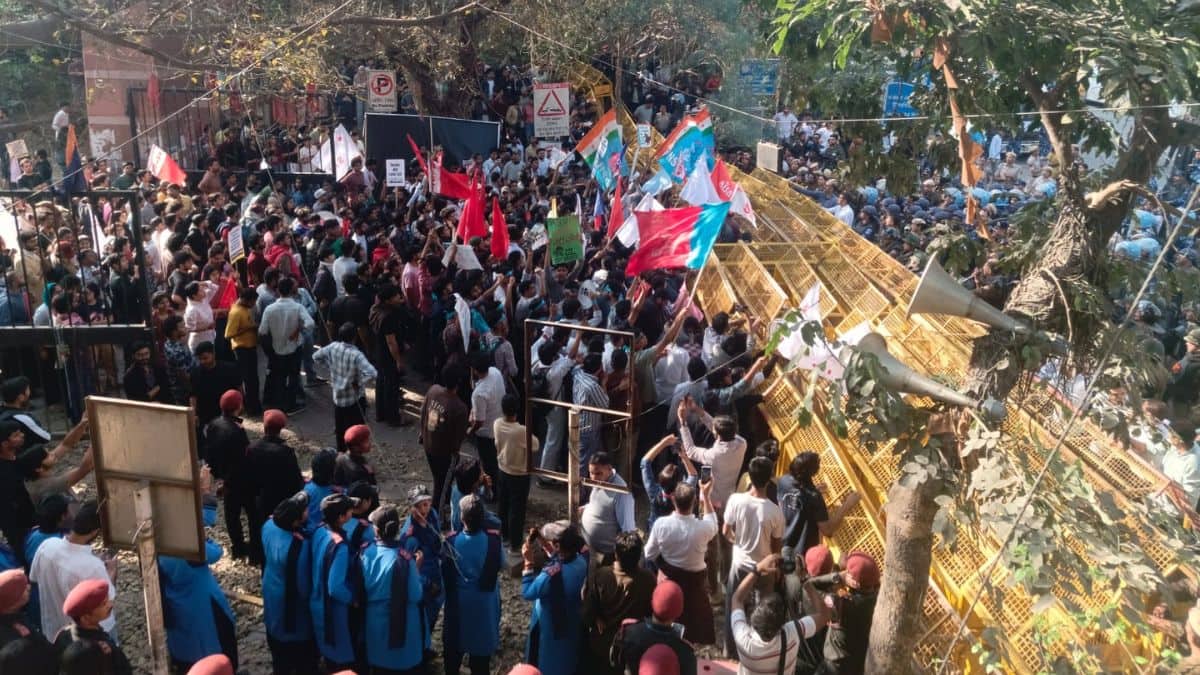
The Jawaharlal Nehru University Students’ Union (JNUSU) were stopped by the police at the Jawaharlal Nehru University (JNU) gate on Thursday, February 26, 2026. They detained several student leaders, including the union president, during a demonstration against alleged caste discrimination and administrative actions.
The protest was part of an anti-casteism campaign launched by student groups, which demanded stronger protections against caste-based discrimination in higher education institutions.
However, heavy police deployment, including rapid action force personnel, barricades, and security checks, prevented students from leaving the campus. Police and security forces were stationed at the university gates even before the march began, effectively blocking the protesters’ route toward the ministry.
JNUSU office bearers detained
Aditi Mishra, JNUSU President, has been detained by the Delhi Police. In a video statement she said, "JNUSU was going to march to the Ministry of Education to demand the Rohith Act and the resignation of our casteist VC, and an accounting of our funds… but hundreds of policemen, with goons to help them, dragged us to this bus."
Along with her, Danish, JNUSU Joint Secretary, has also been detained by the Delhi police.
Why was JNUSU marching to the education ministry?
The JNUSU had announced a “long march” from the campus to the Ministry of Education to raise four major demands: enact the Rohith Act, resignation of JNU's vice-chancellor Santishree Dhulipudi Pandit, oppose university funding cuts, and demand that the government restore the University Grants Commission's equity regulations.
The UGC regulations were notified in January and then stayed by the Supreme Court after massive protests, mainly led by members of the forward castes who thought the policy too “vague” and open to misuse.
Why demand JNU VC's resignation?
JNUSU has called for the resignation of JNU VC over statements she made during a podcast, which the union termed casteist and insensitive to marginalised communities. The row began after she reportedly spoke about being proud of her association with the Rashtriya Swayamsevak Sangh, questioned the significance of University Grants Commission (UGC) regulations, and suggested that marginalised groups should avoid portraying themselves as “victims”.
Former JNUSU president Dhananjay has filed a complaint against her with the National Commission for Scheduled Castes (NSCS).
 Add as a preferred source on google
Follow us for the latest education news on colleges and universities, admission, courses, exams, research, education policies, study abroad and more..
To get in touch, write to us at news@careers360.com.
Next Story
]Latest Education News
]Related News
]JNUSU ends 17-day hunger strike after admin agrees to withdraw FIRs, revoke rustication of students
JNU Strike: JNUSU hits back at VC's remarks over hunger strike, alleges denial of medical care
JNU VC defends handling of hunger strike, cites talks and twice-daily medical care for students


