
‘Shouldn’t open universities like shops’: Odisha higher education expands but students rue plummeting quality
Pritha Roy Choudhury | April 6, 2026 | 02:21 PM IST | 5 mins read
Odisha has announced 4 new universities while students at Sambhalpur University, Utkal University and elsewhere face shortage of teachers, facilities
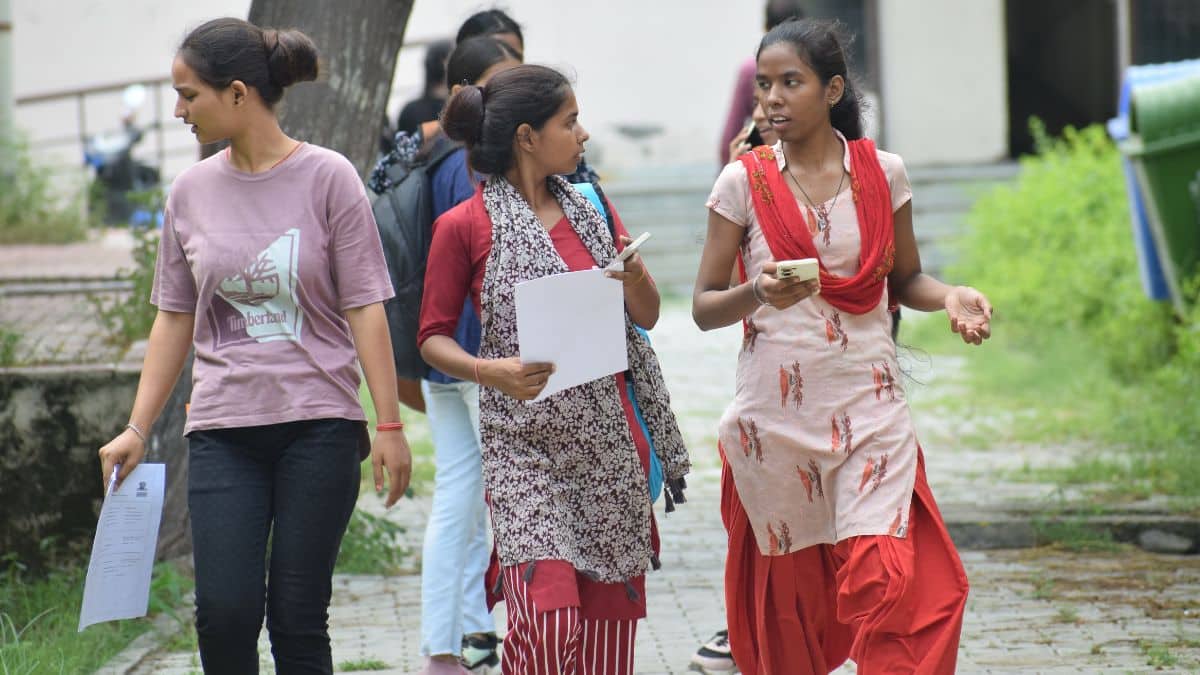
While Odisha expands its higher education network with new universities and new programmes, students across its established institutions say they are still struggling with basic problems, from shortage of teachers and broken infrastructure to lack of laboratories and canteens.
Odisha announced four new universities in its 2026-27 budget. But students across institutions say existing institutions need attention and investment too.
“Most of the time we have to study on our own,” said a science student of Utkal University, Bhubaneswar, one of the state’s best-known institutions. “There is a shortage of faculty and also of equipment for practical classes.” The student also pointed to failing infrastructure. “Many buildings are in a pathetic state. We don’t have enough computer systems,” he said. “There is encouragement for sports at the policy level but no proper facilities.”
‘Just surviving’ at Sambhalpur University
Even basic facilities remain a challenge, pointed out another student, but of the newer Sree Jagannath Sanskrit University, Puri, established in 1981. A postgraduate student of Sanskrit said that residential students face daily hardship. “We don’t have a common room for girls and no canteen. Most of the students stay in hostels and we have to travel nearly 15 kilometres for basic needs,” she said.
The situation is much the same at Sambhalpur University where Dhiraj Kumar*, a student of library science, said students are “just surviving”.
“We are facing problems with everything. The hostel kitchen has not been functioning for the past five days. We are having only bread and for that, one has to travel five kilometres. Teachers are not regular and nearly all are guest lecturers. They just come to mark attendance. The stay in the hostel is pathetic – no one to clean, no transport facility,” he said, listing their problems. Every time it rains, water enters the hostel rooms.
Higher Education Odisha: Universities like ‘shops’
Student organisations say the rapid creation of universities without matching infrastructure has created academic stress.
Akhil Bharatiya Vidyarthi Parishad (ABVP) state secretary Diptimayi Panigrahi said some institutions were upgraded but without adequate preparation. “Programmes were added but where was the infrastructure? Buildings, research facilities and teachers must come first,” she said. She also emphasised on teacher’s recruitment as a priority. “Teacher recruitment must be completed at the earliest. Infrastructure development is urgently required.”
Education expert and former Indian Institute of Mass Communication (IIMC) Dhenkanal director Mrinal Chatterjee said the problems reflect systemic planning issues which need to be fixed first. “There is a deep disconnect between academia and industry. Academia needs to understand the present and future requirements of industry. Staff shortage is also a big issue,” he said.
Also read ANRF spent just 61% of its budget for 2025-2026, nothing in first 2 years: Parliament panel report
He cautioned against expansion without preparation. “We should not open universities like shops. Without infrastructure and adequate teachers, students suffer.” He also stressed that leadership alone cannot fix systemic funding gaps. “No vice-chancellor can do a miracle unless he or she is backed by the administration with adequate funds,” he said.
Talking about his experience, Chatterjee added, “There are many examples where a university started brilliantly but the trajectory could not be maintained because of lack of government support.”
Chatterjee was talking about Odisha State Open University (OSOU) which was established in 2015. “It was a spectacular success in the first five years. The kind of courses they opened, the number of students they enrolled, was spectacular. But then, the momentum was not there because there was no funding, no employment.”
Odisha University: Consolidation vs expansion
The developments have revived a larger debate — whether Odisha should first consolidate existing universities before further expansion.
Education experts like Chatterjee and SK Palita, retired professor, Central University of Odisha, argue that the real challenge is ensuring that infrastructure, faculty and academic quality grow at the same pace as institutional expansion.
Odisha’s higher education sector today reflects both ambition and strain, said Chatterjee.
On one side are curriculum reforms, new programmes and national policy alignment. On the other are faculty shortages, infrastructure gaps and employability concerns.
Chatterjee concludes, “Unless funding, governance and academic planning improve together, expansion alone cannot sustain quality.”
Odisha State Open University targets NAAC accreditation
On its part, the Odisha State Open University (OSOU) is attempting academic restructuring and expansion.
Sachinanda Boxi, associate professor of economics at OSOU, said the university has emerged from a difficult phase after addressing accreditation challenges with the National Accreditation and Assessment Council.
“For the 2022-23 academic year, admissions were affected due to lack of NAAC accreditation. Now the university has secured B++ accreditation,” he said.
He said the State Open University Odisha has since focused on academic expansion. This happened after the present vice-chancellor, Shyam Sundar Pattnaik, joined in May 2024. “The university is not just running, it is galloping in academic directions.” According to him, the university currently offers 19 undergraduate and postgraduate programmes and is expanding specialised courses.
“We have introduced an MBA in Disaster Management, which is a major attraction among open universities,” he said. The programme has been developed in collaboration with the Odisha State Disaster Management Authority and the Government of Odisha has also extended funding support. It seeks to train government officials as well as other students in the open and distance learning mode.
There are other reforms too.
“For the first time in Odisha, we have prepared our PG curriculum aligned with NEP 2020 and the UGC National Credit Framework.” He added that the university has also adopted revised undergraduate frameworks recommended by the Odisha State Higher Education Council.
The university is now focusing on improving its national standing.
“Our next target is NIRF ranking. After the new leadership, faculty members are more serious and academically focused,” said Boxi.
 Add as a preferred source on google
Follow us for the latest education news on colleges and universities, admission, courses, exams, research, education policies, study abroad and more..
To get in touch, write to us at news@careers360.com.
Next Story
]


