
Maharashtra panel suggests making Marathi-medium government schools ‘semi-English’ to draw students
Musab Qazi | March 27, 2026 | 07:59 PM IST | 2 mins read
The panel, led by Maharashtra’s joint director of primary education, also suggests using private resources to close funding gaps and a school adoption programme for state officials
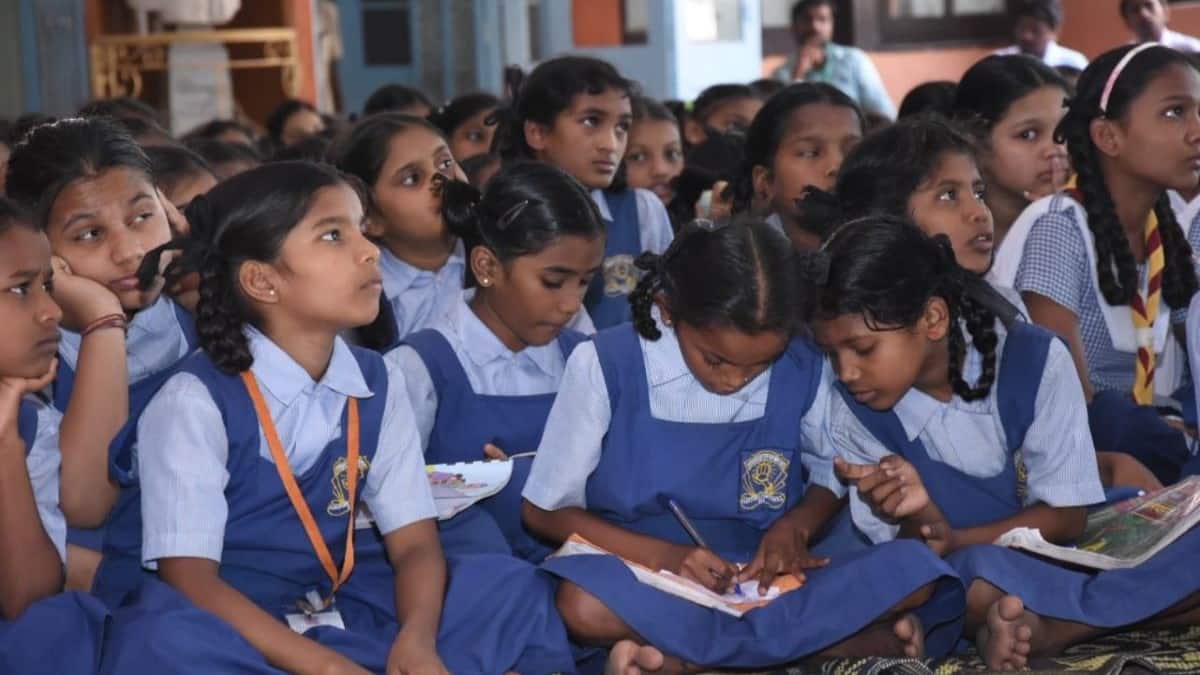
With a consistent dip in the student count at government-supported schools across Maharashtra, and a resurgent political movement against the closure of Marathi schools, a state panel has recommended converting the instruction medium in vernacular schools to ‘semi-English’.
The committee, led by Ramakant Kathmore, state joint director of primary education, has also suggested upgrading schools through corporate social responsibility (CSR) and other private funds and having all education officials in the state adopt one kendra (cluster of 10-20 schools), among other measures aimed at improving enrolment at government-run schools.
In a 10-page report, the panel has presented two sets of recommendations for the state schools – activities that can be carried out around the year and initiatives that can be run during the summer vacations. The list includes several programmes already underway at the government schools, as well as some new ideas.
Maharashtra Schools: English-medium teaching
One of the key policy recommendations by the committee, intended to curb the flow of students towards private English medium schools, is to focus on teaching English language. The panel has also recommended starting semi-English classes, where science and mathematics are taught using English textbooks, following approval from the school management committees (SMCs). The schools and teachers should be trained for this purpose, proposes the report.
Many of the vernacular medium schools, including the government schools run by civic bodies in the cities like Mumbai and Pune, have been following the semi-English system for the past several years. An enabling government-resolution was issued in 2009, allowing vernacular schools to adopt the bilingual instruction method for the two subjects.
To this end, the state is also giving preference to the candidates who studied in English-medium schools and colleges, when it comes to recruiting teaching staff for its schools.
The suggestion to pursue private donors to improve schools follows the state’s plan to have corporate bodies and non-governmental organisations (NGOs) adopt state government schools. However, the scheme, first announced in 2023, is yet to see much response.
Recently, the central government, as part of its revamp of Samagra Shiksha Abhiyan (SSA) scheme, urged the states to involve the locals and private sector to bridge the funding gap for government schools.
The panel has proposed a new initiative where all Group A to C officials in the district education department will adopt at least one cluster of schools. These officials would be responsible for enhancing the physical infrastructure and academic quality at their adopted schools. The state had earlier asked the elected representatives to adopt schools.
In a bid to acclimate pre-school kids with the schools’ enviorment, the committee has also stressed on improving coordination between the local Anganwadi and school staff. It has also has underscored the importance of involving parents, former students and the general population in schools’ various activities.
 Add as a preferred source on google
Follow us for the latest education news on colleges and universities, admission, courses, exams, research, education policies, study abroad and more..
To get in touch, write to us at news@careers360.com.
Next Story
]Latest Education News
]Related News
]CBSE Date Sheet 2027 LIVE: Class 10, 12 private exam form out; apply by October 23
CBSE Class 10, 12 private exams 2026-27 registration begins on cbse.gov.in, check eligibility and fees
NIOS Date Sheet 2026 LIVE: Class 10, 12 October exam schedule soon at nios.ac.in, latest update


