
Private NGOs are revamping anganwadis into proper preschools, but funding and fairness gap persists
Team Careers360 | March 2, 2026 | 01:39 PM IST | 12 mins read
NGOs step in to boost Anganwadi jobs, train workers and revamp centres as government funding stagnates, but questions on equity and long-term viability persist
Musab Qazi and K Nitika Shivani
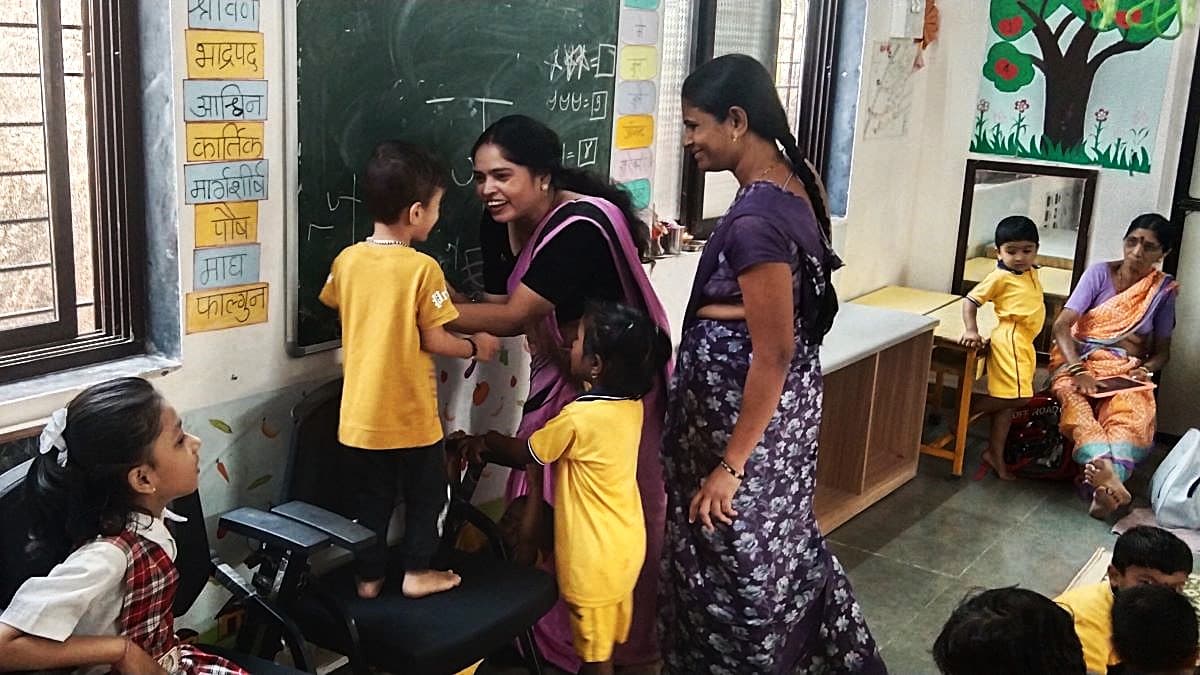
Jyotsna Gaikwad, 27, has a zippy presence. One moment, she is reading a familiar children’s story to her preschool students, her tone upbeat, sing-song; the next, leading them in an exuberant dance to the tune of a goofy nursery rhyme. She keeps moving around the small room, challenging some tots and offering adulation to others, as they learn to write Marathi letter ja. The activities change every few minutes amid loud instructions – perhaps the only way to keep a restless group of 30-35 in different age brackets interested.
The scene wouldn’t be out of place at a typical playschool, except that this isn’t one; it’s an anganwadi – the government-run child care centre. And Gaikwad isn’t, at least officially, a ‘teacher’; she’s an Anganwadi worker (AWW). However, this centre, located at Ghotsai village in Thane district on the outskirts of Mumbai, is unlike most. Well-illuminated and ventilated, it has a smart TV, a neatly-stacked library and colourful, child-friendly furniture. The walls are adorned with lively pictures, crafts, alphabets and numerals. The young learners are dressed in bright yellow activewear, with soft pastel blue velvet bags to match.
“We do everything that happens in English schools… None of the kids here go to English school,” Gaikwad, who holds bachelor’s degrees in humanities and pharmacy, says as she sees off her class after a one-and-a-half-hour long school day.
The Ghotsai Anganwadi is among the few in the district that serve as a showcase of how the humble child care units can be transformed into vibrant preschools. However, this particular centre owes its good fortune not to the state or central government, but to two private non-profits – Pratham Education Foundation, one of the largest educational non-government organisations (NGOs) and Reliance Foundation, the philanthropic arm of Mukesh Ambani’s business conglomerate. While the former trains Gaikwad and many of her AWW colleagues in early childhood care and education (ECCE), the latter revamped the physical infrastructure and provided other amenities.
Reimagining anganwadis
As state and central governments look to universalise pre-primary education – meant for kids aged between three and six – following the rollout of the National Education Policy (NEP) in 2020, the vast network of anganwadis spread mainly across rural India has assumed a key position. The NEP advocates reimagining them beyond their nutrition and health-focused role and as play-based education centres. It also recommends developing a national curriculum framework for early years, integrating anganwadi centres (AWCs) with local primary schools and training AWWs in the new curriculum.
The centre has framed curricula, policy guidelines and some programming initiatives to put these ideas into practice. However, much of it still remains on paper, thanks to the historic administrative separation of anganwadis and schools – the ministry of women and child development (MWCD) looks after the former while ministry of education (MoE) regulates the latter – the absence of any formal educational research and training mechanism for foundational stage, and limited financial support.
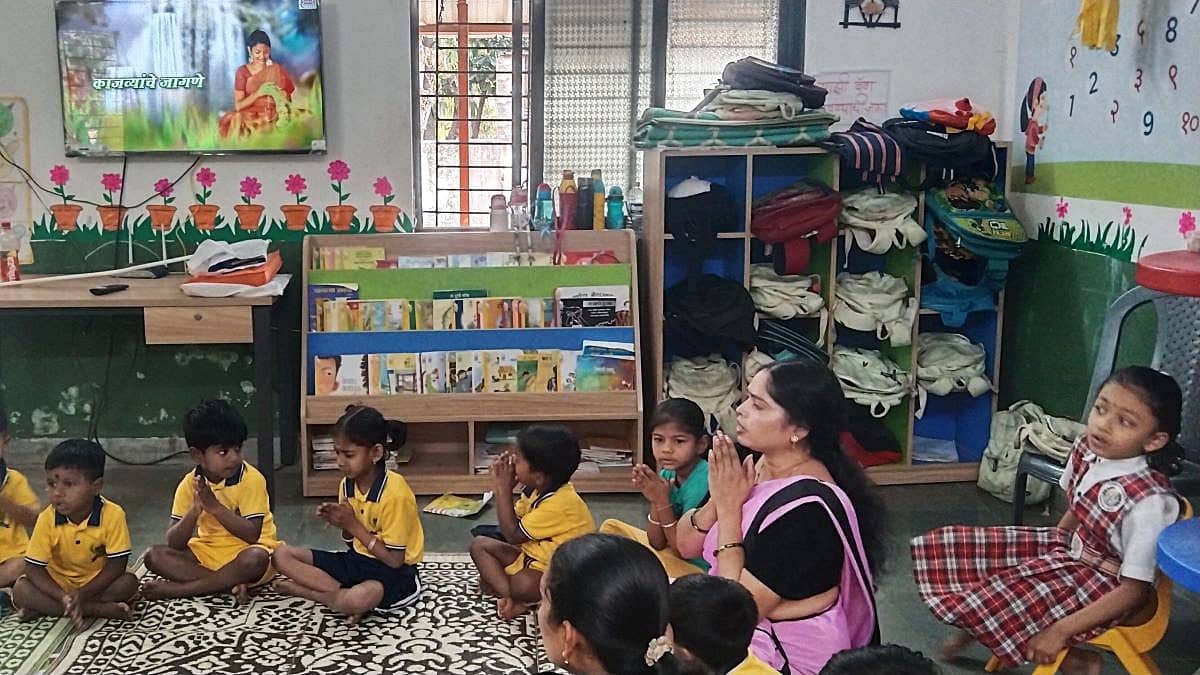 Prayer session at Ghotsai Anganwadi. (Image: Musab Qazi)
This expertise and resource gap is increasingly being filled by private organisations and donors, who are not only assisting the state in developing the ECCE syllabus and policies, but also offering extensive training and hand-holding to WCD officials, AWWs and even parents transitioning to a more structured early education regime. They are also helping in giving the decades-old AWC buildings a facelift.
Yet, the experts underscore that these efforts can’t be sustained or scaled up equitably without a significantly higher financial and organisational commitment from the governments at all levels. Meanwhile, AWWs, already burdened by the long list of responsibilities, are offering more mixed reactions – enthusiasm about their expanded role, anxiety over being made subservient to school educators, and resentment due to the government’s constant reluctance to regularise their honorary services and increase compensation.
Also read Ekalavya Model Residential Schools: 229 sanctioned EMRS yet to open, budget slashed by up to 60%
Anganwadi: Preschool policy push
Around 14 lakh anganwadis are operated across the country as part of the Integrated Child Development Scheme (ICDS), the centre’s umbrella programme for children below six years, which completed 50 years last year. Currently, Anganwadi centres primarily run six services – supplementary nutrition, immunisation, health check-ups, referral services, nutrition and health education and non-formal preschool education.
The thrust on the educational component began in recent years in response to reports about poor literacy and numeracy skills among schoolchildren as well as the global push towards universalising foundational learning. While the importance of early childhood education was mentioned in several past policy documents, including the National Policy on Education (NPE) 1986, it wasn’t covered under the Right to Education Act.
The National ECCE Policy 2013, for the first time, laid out a comprehensive vision for universalising foundational learning. Post NEP, the education ministry’s National Curriculum Framework for Foundational Stage (NCF-FS) offered a detailed academic programme for children aged 3-8. In 2024, MWCD’s ECCE Task Force devised a national curriculum framework for children aged 3-6, named Aadharshila, as well as a stimulation programme for those below three years, called Navchetana. Both programmes are being implemented through AWCs, with states improvising on the curricula.
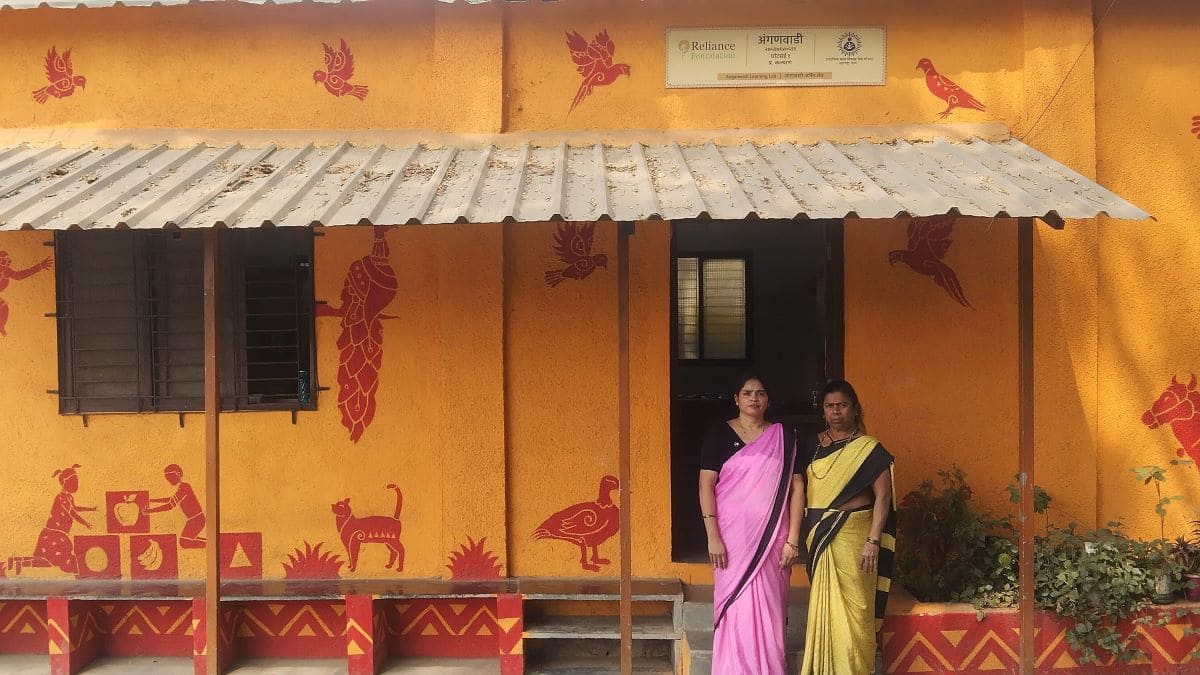 The worker and helper at Ghotsai Anganwadi. (Image: Musab Qazi)
In 2023, the ministry launched the ‘Poshan Bhi Padhai Bhi’ scheme to ensure quality education at anganwadis. Under this programme, WCD ministry is conducting three-day training sessions for the state level master trainers – supervisors, child development project officers (CDPOs) – as well as two-day training for AWWs. As of July last year, most of the 43,000 master trainers and 5.62 lakh out of 13.15 lakh workers underwent training. Notably, NEP recommends a much longer training period – six months for Class 12 graduates and one year for those with lesser qualifications.
Last year, the ministry also released a guidebook for co-locating angwandis with government-run and aided primary schools. It mentioned that only 2.9 lakh of 14 lakh anganwadis are co-located. The UDISE+ 2024-25 report revealed that around 72% of 8.6 lakh government schools in India either have a pre-primary section or AWC on campus.
The separation of anganwadis and schools appears to have had a noticeable impact on access to preschool education. The same UDISE+ report shows that over 20% of 92.78 lakh kids entering Class 1 in government schools lack preschool experience. Anganwadis account for the majority of students who do possess preschool training.
Anganwadi Jobs: Private players step in
It’s these circumstances that have prompted private education organisations to turn their focus on anganwadis. They strike an agreement with the state governments and their district administrations to work with their child officials and anganwadi workers. They appoint training and monitoring personnel in each sector – a cluster of 25-30 anganwadis – who shadow the sector’s supervisor. These persons carry out periodic offline training sessions for AWWs, besides providing video-based training material to them.
In the case of Pratham, one AWC in each sector is developed as an exemplar unit and is named ‘Anganwadi Learning Lab (AWLL). This Angnwadi serves as a headquarters of sorts for the cluster and also doubles as a training facility for other units. The organisation is currently working with 12 states, with direct involvement in operations at seven.
The NGOs also seek to involve parents and volunteers from the villages in upgrading their anganwadis. One of the key ways is to create mata gut – small groups of around four or five mothers who get together to carry out play-based learning activities alongside their wards. As suggested by MWCD, they observe monthly ECCE days to bring the local community and parents to anganwadis.
“We appeal to the young women and mothers in the village to join AWWs in caring for the kids, as one needs a lot of energy to handle their movements. This is part of shramdaan, our culture of extending a helping hand. The volunteers are offered a variety of free-of-cost skill development courses in lieu of their services and also given certification,” said Smitin Brid, who is spearheading Pratham’s ECCE efforts.
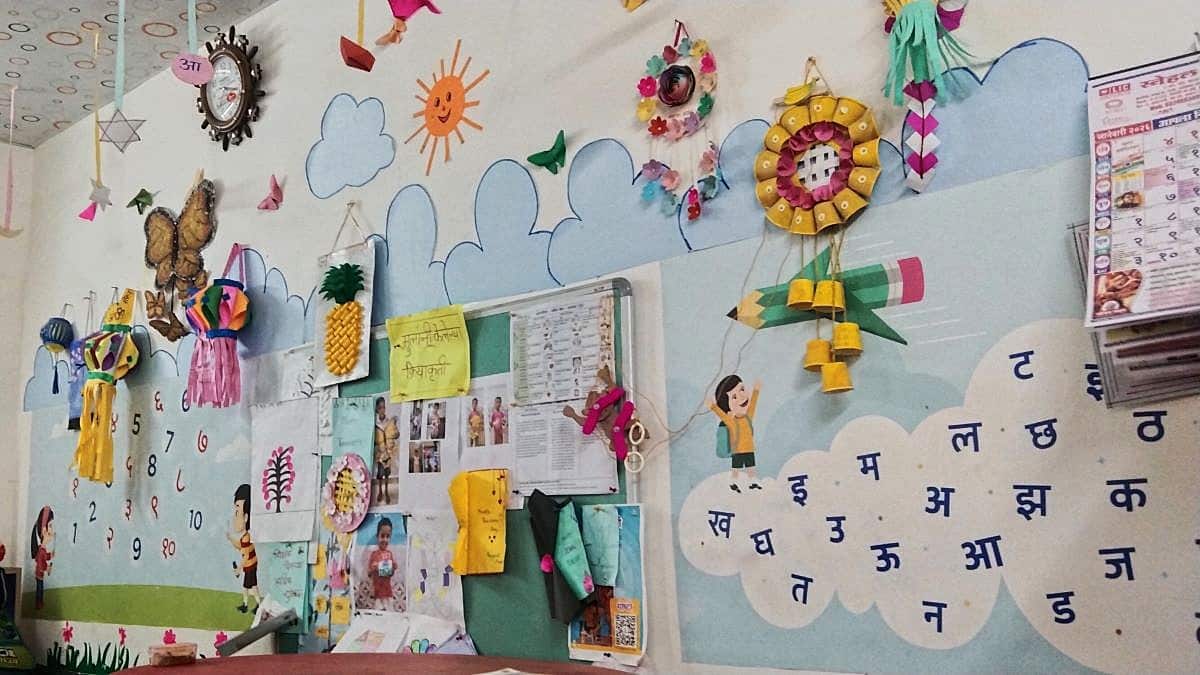 Revamped interiors of Ghotsai Anganwadi. (Image: Musab Qazi)
The organisations claim that their work has resulted in significant improvements in kids. For instance, Rocket Learning, a Delhi and Bengaluru based non-profit working in 200 districts across 12 states, including Maharashtra, Haryana, Punjab, Uttarakhand, Chandigarh, Delhi, Uttar Pradesh, Madhya Pradesh, Telangana, Meghalaya, and Rajasthan, found that an average child in the centres they serve attains skills at the top third learners at other centres. The NGO claims that 70% of the children in its programmes are ready for class compared to 50% children elsewhere.
“The governments are very keen to take the help of expert organisations. There’s a technical need when it comes to anganwadis. And since we work pro bono, it’s very easy for the government to work with us,” said Azeez Gupta, co-founder of Rocket Learning.
For the last few years, Anil Agrawal Foundation, the social impact organisation of the Vedanta group, has been refurbishing anganwadis as part of its flagship ‘Nand Ghar’ project. The organisation carries out civil and electrical works at the Anganwadis and also paints their walls with cheerful pictures and other learning props. It also provides child-friendly furniture and smart TVs.
Shashi Arora, Nand Ghar CEO, informs that they have so far given facelifts to 11,000 anganwadis across the country, 5,000 of them in the last financial year alone. They plan to add another 10,000 this year. “We focus more on rural and tribal areas. Parents hesitate to send their children to anganwadis if the place is not inviting,” he said.
Anganwadi Recruitment and More: Funding gap persists
While the private sector has picked up the slack, government funding has stagnated. A recent report by the Alliance for the Right to Early Childhood Development and FORCES (Forum for Crèches and Childcare Services) shows that, between 2020-21 (actual spending) and 2024-25 (budget estimates), the central government’s cumulative spending on ECD-related programmes, encompassing children aged 3-8, has oscillated between 0.72% to 0.69% of the total budgetary expenditure and between 0.1% and 0.12% of the Gross Domestic Product (GDP). The expenditure on programmes specifically related to early learning has increased from Rs 696 crore in 2020-21 (actuals) to Rs 1,031 crore in 2025-26 (budget estimate).
“Spending on two major schemes, Saksham Anganwadi and Samagra Shiksha Abhiyan, has increased marginally in nominal terms, but if we consider inflation, the expenditure on early childhood education (ECE) would be stagnant,” said Protiva Kundu, consultant at the Centre for Social and Economic Progress, New Delhi, and one of the authors of the report.
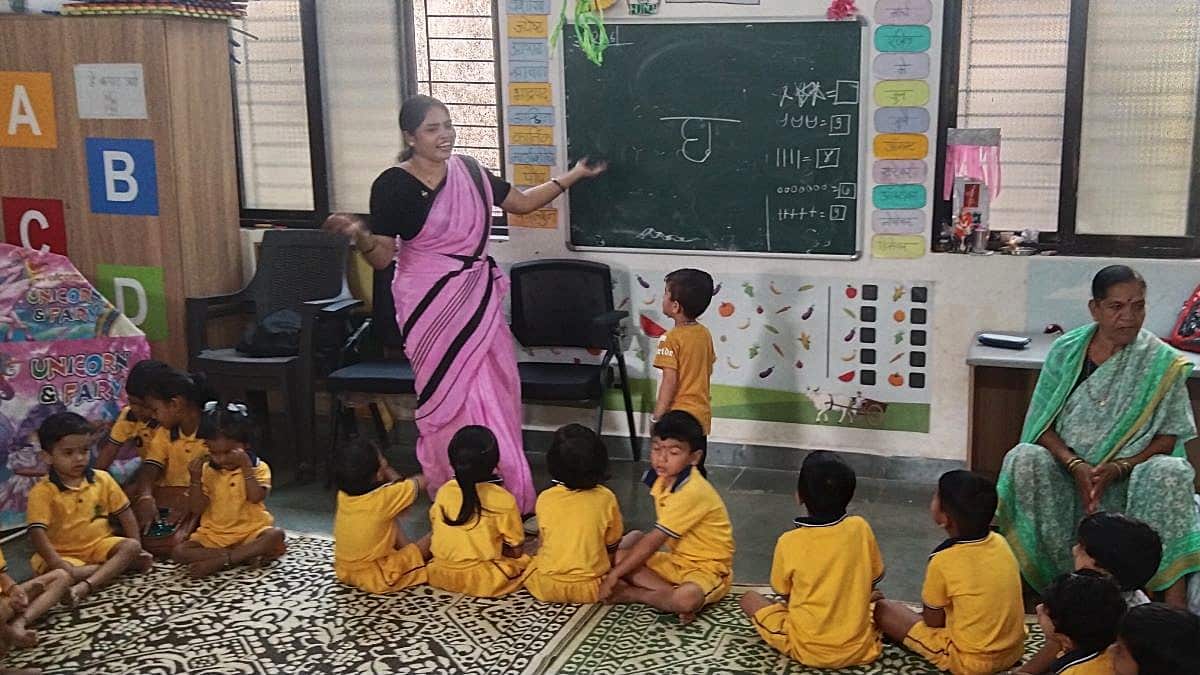 Ghotsai Anganwadi. (Image: Musab Qazi)
She said that the government should increase its funding on everything from building physical infrastructure of anganwadis to providing educational material, with priority on recruitment of regular cadre early educators and their as well as AWWs’ training. “I believe that the idea of ICDS for ECE is very well thought out as it focuses on holistic development. The challenge is that the pre-school education component of ICDS is the weakest link. Still the majority of 3-6 year old children attend AWCs, while only 30% schools have pre-primary sections. Hence, the government should work on strengthening AWCs,” she adds.
Kundu said that the poor convergence between MoE and MWCD, lack of need-based planning and underallocation of funds remain the main challenges in universalising ECE, adding that the private endeavours aren’t enough. “It is obvious that the children from rich or upper middle class will go to private schools and day-care. ECE should be provided equitably. The private sector will never operate in tribal areas and remote rural areas. If there are low-cost private options, the quality of ECE would be a concern. The base cannot be weak,” she said.
A 2021 report by Save the Children and Centre for Budget and Governance Accountability (CBGA), to which Kundu had also contributed, pegs the estimated cost of universalising ECE in India, considering regular salaries for the teacher, to be anywhere between 1.5% to 2% of GDP. If one is to only consider the children not receiving pre-primary education, the cost would be between 1% and 1.7% of GDP. By comparison, Scandinavian countries, who spend the highest on early childhood education, allot 1.1% to 1.6% of their GDP under this head.
Anganwadi Teachers: Rejigging activities
A few kilometres from Ghotsai, Kanta Dhumal, 60-year-old AWW at a modest centre in Ankharpada village, doesn’t seem as excited about the new curriculum, which, according to her, is little more than rejigging the activities already underway at AWCs. She is more concerned about the paucity of funds for some of the basic facilities at the centre and the stagnant honouraria paid to the workers and helpers.
“The government asks us to do a lot of work. We work more than teachers. The small kids face so many problems. Many times we have to work outside the regular hours. Our services should be regularised," she said, adding, “The little money provided to purchase the necessities isn't enough. We have to depend on the people's largesse for the smallest of things, like ceiling fans.”
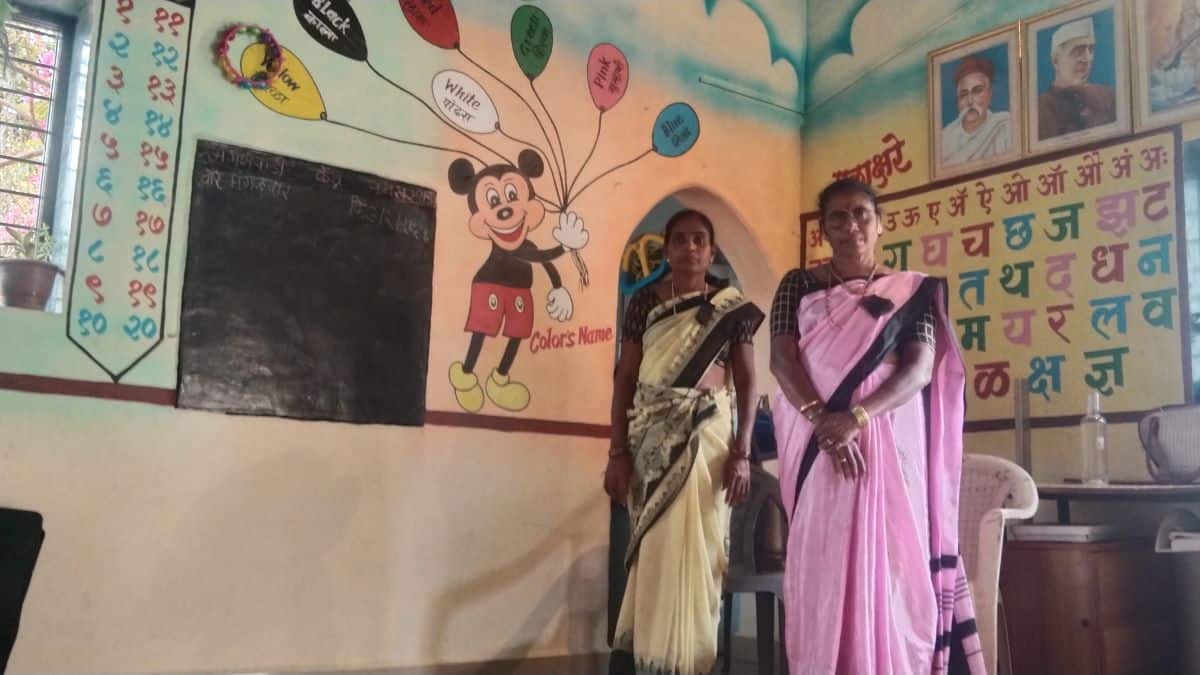 The worker and helper at Ankharpada Anganwadi. (Image: Musab Qazi)
Elsewhere, in Tamil Nadu’s Hosur, an Anganwadi teacher described 2025 as a turning point, when changes began appearing after a long lull since the COVID years. She said workers were trained in basic English instruction and, for the first time, formally required to handle data entry and maintain detailed manual records to be shared with nearby school principals.
“At first, it was difficult even to read and understand the formats,” she said. While the training explained what was expected under NEP, she said it did not fully prepare workers for balancing these new responsibilities alongside nutrition delivery and other duties.
In Salem, the strain proved overwhelming for one anganwadi teacher, who eventually resigned. “I was teaching children, learning new methods, doing administrative work, and taking extra classes whenever required,” she said. The pressure, she added, affected her health. “Recruitment was poor, the workload kept increasing, and there was no real reduction in other duties.” She quit at the end of 2025.
Parents, meanwhile, are beginning to notice changes, though their confidence remains cautious. Meena Ramesh, whose four-year-old attends an anganwadi linked to a government school in Chengalpattu, said her perception of the centre has shifted. “Earlier, we only thought of the anganwadi as a place where children ate and were looked after,” she said. “Now there are fixed activity times, songs, storytelling, and even some English words.” But she remains unsure about continuity. “There is learning, but it still does not feel like a proper pre-school. I don’t know how smoothly children will move from here to Class 1.”
 Add as a preferred source on google
Follow us for the latest education news on colleges and universities, admission, courses, exams, research, education policies, study abroad and more..
To get in touch, write to us at news@careers360.com.
Next Story
]What changes with AP Draft Coaching Rules? 5-hour cap, fee refunds, district panels with ‘civil court powers’
Andhra Pradesh draft coaching rules bring junior colleges under purview, ban public display of student ranks, mandate wellness cells, week offs; district committees can inspect without notice, initiate suo motu inquiries
Sheena SachdevaLatest Education News
]Related News
]Board Exam Time Table 2027: TN 10th, 12th, AP Inter date sheets out; TS, CBSE, RBSE, JKBOSE schedule soon
CBSE Board Exam Dates 2027 LIVE: Class 10th, 12th subject-wise timetable soon at cbse.gov.in, LOC submission
Andaman schools shut on October 27; Odisha districts on October 28, 29 amid ‘Cyclone Arnab’


