
Students in University of Aberdeen, Mumbai, get credential exactly the same they’d get in Scotland: COO
Shradha Chettri | April 7, 2026 | 05:50 PM IST | 7 mins read
University of Aberdeen Mumbai launches business management, computing science, data science, economics courses; MBA, MSc in AI; offers Rs 2 lakh scholarship
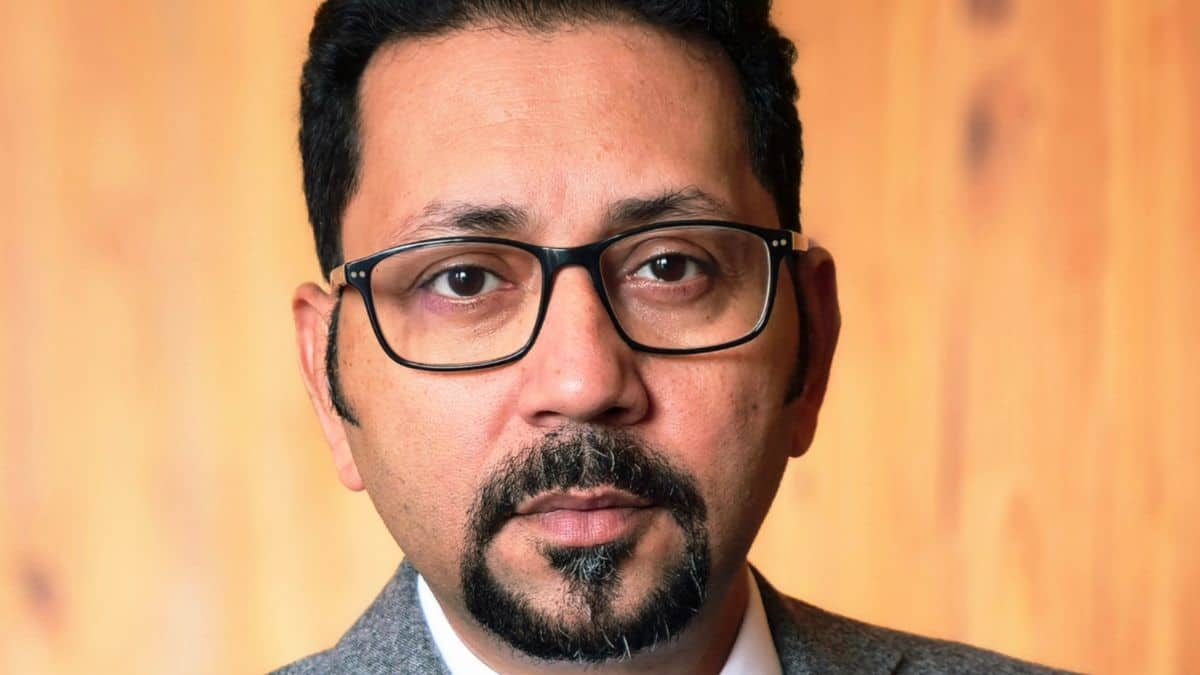
Among the 15 foreign universities setting up campuses in India, there is one from Scotland – the University of Aberdeen – a university which is older than Harvard. Professor Rahul Choudaha, the chief operating officer (COO) spoke to Careers360 about how the growing upper middle class India and expanding economy provide an important opportunity for foreign universities. He adds that their Mumbai campus will be a great space for providing global learning. With six courses being launched in the first year, the university is offering Rs 2 lakh as pioneer scholarship for the founding batch in the form of tuition fee waiver. Edited excerpts:
What opportunities did University of Aberdeen see in India to set up their campus?
There is a huge appetite for getting high quality global learning in India. As the economy grows, the upper middle class has been expanding, the aspirations have been growing. But the opportunities are shrinking. Students cannot go overseas that easily. They don’t see the pathway to recover the expenses they have made. Visa and immigration policies are becoming tighter. The third factor is the cost – if we see the depreciation of the currency and you see the cost on the other side, it is very high in certain scenarios for them to recover the money.
The undercurrent is also that parents want to send their kids, where they are safe and can take care of them. Proximity is a very critical factor which has always kept undergraduate mobility limited. About 80% of students who are from India in foreign campuses are at masters level. The UG population never has had good global learning options.
For Aberdeen, this is not the first international campus – there’s one in Qatar already. There is a joint institute in China too. There is extensive experience of the university to work with internationalisation.
Why was Mumbai chosen as a destination to start your first campus in India?
Mumbai is a very thoughtful choice with the combination of at least two factors. One is the size and scale of the city and the region which it connects to. It is very critical in terms of the demand side – from parents and students – for high quality global learning at home. Just from the sheer number perspective, it is a great place to be in.
The second part is the support we have received from the government of Maharashtra and Mumbai as well. They have been very helpful and have made the process. It has been a thoughtful partnership.
It is also the mismatch between the demand and supply in the overall higher education system. The NCR area has quite a few private universities because of the state private universities Act, which allowed them to grow 10-15 years ago. It did not exist at the same level in Maharashtra, Mumbai, and the adjoining regions even though the Act existed.
How is University of Aberdeen going to be different from other foreign universities setting up campuses in India?
The University of Aberdeen is five centuries old. Everyone knows Harvard, it was founded in 1626. Aberdeen was founded in 1495, more than a century before Harvard. The four-year degree model is an export from Aberdeen to the United States.
There is a huge legacy of this Scotland curriculum, and most specifically Aberdeen, unlike the other English and Australian universities which are coming up with three year degrees. With National Education Policy (NEP), there is already an ask to move towards a four-year degree. The number one differentiator is the curriculum, which is aligned with NEP.
The other thing is bringing the global degree to India. Students get a credential which is exactly the same as they would have got in Scotland. What we have to ensure is that the rigour, curriculum, assessment, quality assurance is as per UK standards.
The other unique aspect about Aberdeen is the part of interdisciplinary education, which is an integral part of the curriculum.
What are the courses the university is starting with?
This year we are launching six programmes, four UG and two masters. All are pretty much high demand programmes from not only the students perspective but also from societal and economical needs.
The UG courses are Business Management, Computing Science, Data Science and Economics – four programmes with 40 students each or more. Currently we are working with small numbers.
The two PG programmes are MBA and MSc in Artificial Intelligence for which we are looking at 30 students.
What are the admission criteria at University of Aberdeen?
No standardised test for admission, like it is followed in the UK campus. The reason is the very important element of access and equitable opportunity to everyone. It is an important factor of our admission policy.
There is no interview screening, because we do not want to bring subjectivity to the process. The 12th grade marksheet and a cutoff of 75% for students from Central Board of Secondary Education (CBSE) are the eligibility criteria.
For masters, there is a difference between MBA and MSc eligibility though. For MBA, the cutoff is 40% or higher, but students need two-year work experience, since it is a one-year course. For MSc in AI, we have a range from 55% to 65% depending on the nature of the university.
How affordable are the courses being provided at the Mumbai campus?
It is a competitively priced degree – a bit lower than other universities. We are at Rs 12 lakh per year for UG programmes. We give a scholarship called Aberdeen Pioneer scholarship of Rs 2 lakh, so the first year tuition fee will be around Rs 10 lakh. For year-on-year, it will be a single digit increase taking into account inflation and other factors. For MBA programmes, it is Rs 17 lakh with a Rs 2-lakh waiver as scholarship.
It will be the founding batch, and we will be offering the pioneer scholarship to everyone who enrols during the September intake in the form of tuition fee waiver.
What about faculty?
Aberdeen UK campus controls the whole academic enterprise – from curriculum, faculty, research and other aspects. The faculty hiring process will be the same as that in the UK.
There are three different sets. One set will be international faculty who have worked, earned their credentials overseas. The other will be India-based who have international experience but are already in India. The third is the flying faculty from Aberdeen who will come stay with us for one semester.
Like faculty, will students also have the option of mobility?
Mobility is a very critical component for someone who is considering the international programme with us. Students can have global exposure in multiple ways. One is from the flying faculty bringing international experience and dimension to the classroom. Second is the curriculum and the third is where do students learn from. We are working on a thoughtful and intentional plan to make sure students gain experience at the Aberdeen campus.
If you could share details about the campus coming up in Mumbai.
Mumbai is a large metropolis, so we want to make sure it is accessible. The second part is are we connected to the industry. Access to industry is key to experiential learning.
We are right in the middle of the city at Powai, opposite to the L&T Innovation campus. We have taken a multistoreyed building for the campus. The long-term plan is to be part of Edu City coming up in Navi Mumbai, closer to the airport. We wanted to be an urban university.
An important expertise for Aberdeen is also medical sciences. Are we going to see such courses here as well in future?
Aberdeen is known for a lot of work in the field of health sciences, medicine, technology in medical sciences and others. At the Mumbai campus, we will be rapidly building up capacity, number of programmes and research.
Having said that, it is a field with its own nuances, regulatory journey. Currently in the University Grants Commission (UGC) framework, professional courses, such as medical, are not the easiest to get started with. We need some time to build capacity and a regulatory framework.
 Add as a preferred source on google
Follow us for the latest education news on colleges and universities, admission, courses, exams, research, education policies, study abroad and more..
To get in touch, write to us at news@careers360.com.
Next Story
]CBSE changing Class 9, 10 syllabus from 2026-27; 3rd language compulsory, 2 levels of maths, science
CBSE Class 10 syllabus changes; reform rollout begins at Class 9. First impact on CBSE Class 10 exams expected in 2028. Here’s more on new subjects, changes in exams, internal assessments
K. Nitika ShivaniLatest Education News
]Related News
]Delhi University 103rd convocation on Nov 20; 92,000 students to receive degrees, Amit Shah chief guest
IIT Hyderabad to organise international conference ‘PHOTONICS 2026’ in December
IIT Bombay Protest: Faculty question who authorised police to enter campus, detain students


